On releasing the guilt of growth and refusing to be held hostage to a past that no longer belongs to you
Have you ever noticed how quickly someone reaches for the phrase “I remember when” the moment your life starts to look different than it once did?
It almost sounds gentle at first. Nostalgic, even. But spend a little more time sitting with it and you begin to feel what it actually is—a leash. A quiet, calculated pull back toward a version of you that was easier for them to be around. More familiar. Less threatening. Less free.
“I remember when you used to…” is rarely about honoring your story. It is about keeping you tethered to it.
The Unspoken Expectation Hidden Inside That Phrase
When someone says “I remember when” or “you used to think that” or “that’s not like you,” they are rarely trying to celebrate how far you have come. What they are really saying, underneath the softness of it, is: come back. Come back to the version of you I understood. The one who didn’t make me question my own choices. The one who stayed where I could see her.
Because here is the truth that nobody wants to say out loud: your growth can feel like an indictment to the people around you who have not moved. When you begin to make different decisions, set new boundaries, choose better relationships, or simply refuse to carry what you once carried without a word, it holds up a mirror. And sometimes the people closest to you do not like what they see in it.
So they reach for the “I remember when.” They remind you of your mistakes. They reference the version of yourself you worked the hardest to leave behind. Not because they are trying to hurt you, though sometimes they are. But because your evolution is inconvenient to their comfort.
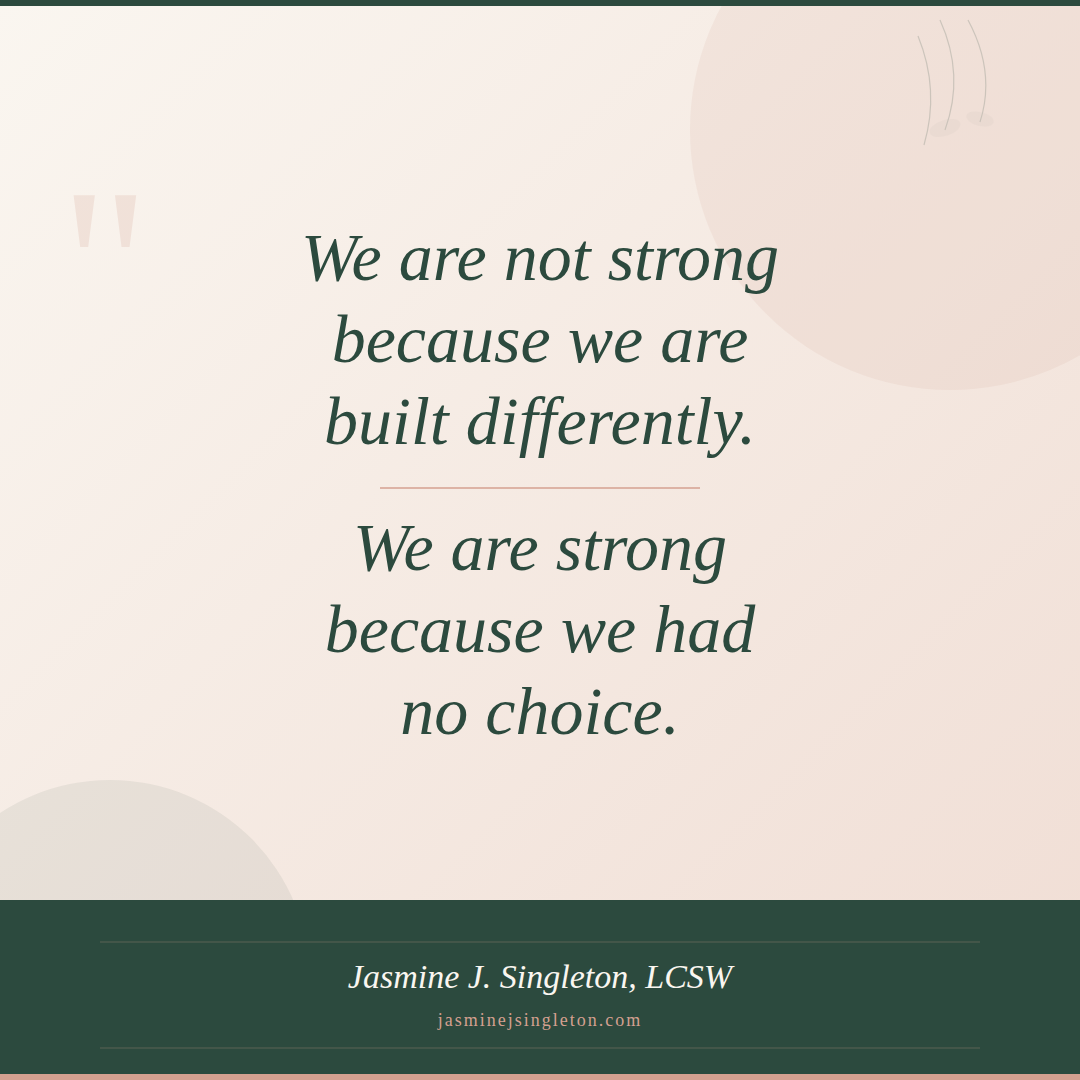
Your growth is not a betrayal of who you were. It is a testimony to everything you survived.
The Disguise That Insults Wear
There is a specific kind of cruelty that presents itself as humor. The joke at your expense that is supposed to be taken lightly. The “remember when you did that” delivered with a laugh so that any pushback on your part makes you the one who is too sensitive, too serious, can’t take a joke.
Pay attention to the people in your life who use your past as a punchline. Who bring up your lowest moments when the room is full. Who remind you, in front of others, of who you used to be with just enough of a smile to make it socially acceptable.
That is not love. That is a power move.
It is designed to keep you small enough to need them and familiar enough not to threaten them. It is an insult wearing the outfit of inside-joke intimacy. And you are allowed to name it, even if naming it makes them uncomfortable.
You Are Not Required to Live in the Past
Here is what is true: you have made choices you would take back. We all have. Decisions that we replayed a hundred times, that we wished we could reach back and undo. Roads that felt right and ended badly. Relationships we stayed in too long. Versions of ourselves that we are not entirely proud of.
But you are the one who lived through those moments. You were there for all of it. The shame, the confusion, the regret, and the slow, hard climb out of it. You do not need anyone to remind you of what you already carry.
You cannot time travel. What you can do is refuse to let someone else use your past as a permanent residence. Your mistakes are part of your story. They are not the whole of it. And they do not define what you are allowed to become.
You have permission to want better and to actually pursue it. Full stop.
On Being Held Emotionally Hostage
There is a particular kind of exhaustion that comes from being around people who are still attached to a version of you that no longer exists. Who talk about you in the present tense as if you are still the same person you were five years ago. Who resist every sign of your change because somewhere in their own story, your staying the same served a purpose.
These people are not always strangers. They are often people we love. Family members who remember our worst chapters. Old friends who bonded with us over shared suffering. Partners who preferred us when we were a little more uncertain, a little less sure of ourselves.
And the thing is, letting go of their version of you is not the same as letting go of them. It is possible to love someone and also refuse to be defined by their memory of who you were. It is possible to hold the relationship while releasing their grip on your narrative.
You are allowed to outgrow the version of yourself that someone else still needs you to be.
Standing in Your Truth in the Present Moment
The work is not about defending your growth to anyone who challenges it. You do not owe anyone a detailed explanation of how you got from there to here, or why you are no longer willing to fit into the container they built for you.
The work is about standing firmly inside of who you actually are right now, today, in this present version of your life, without apologizing for the distance between that and where you started.
Setting a boundary with someone who holds your past over you is not cruelty. It is clarity. It is saying — I know who I was. I know what I have lived. And I have also decided what I am no longer willing to carry.
That is not arrogance. That is self-preservation. That is healing made visible.
Release the Guilt. Keep the Growth.
Guilt is one of the most effective tools people use to keep us frozen. And when it is attached to our past, to who we once were, the mistakes we made, the ways we fell short, it can feel almost righteous to hold onto it. As if carrying it is some form of penance.
But guilt that has expired its usefulness is just weight. And you have already proven, more times than anyone has given you credit for, that you know how to carry weight. What you are learning now is that you do not have to.
You do not have to live in the shadows of who you were. You do not have to keep apologizing for the choices you made with what you knew at the time. You do not have to remain a permanent exhibit of your most painful chapters for the comfort of people who never had to live them.
You are allowed to close that chapter, not because it never happened, but because it is finished. And you have not just survived it. You have grown past it.
A Note for the Woman Reading This
If someone has been using “I remember when” to keep you small, this is your reminder that you are not required to stay.
If someone has been holding your past over your head like a ledger of everything you owe them, this is your reminder that the debt has been paid.
If you have been carrying guilt about who you were before you knew better, this is your permission to put it down.
You are not the woman you were. You are the woman you chose to become. And that choice — the decision to learn, to evolve, to build a life that reflects who you actually are now — is one of the most courageous things a person can do.
Stand in that. Unapologetically.
If this resonated with you and you are navigating the emotional weight of growth, relationships, or releasing the past, support is available. If you are in Texas or New Mexico, visit glwellnesscenter.com for a free consultation. Wherever you are, you deserve the space to become who you were always meant to be.